Simplifying Your Front Desk: Call Queues
Stay ahead of changing communication technology with practical insights on UCaaS, hosted VoIP, AI caller tools, and business phone system trends. Join our newsletter below.
Newsletter Join
Simplifying Your Front Desk: Call Queues
As more and more businesses push to streamline communication and create remote work environments for their employees, a common question often arises. How will our phone system adapt to meet our ever-changing needs? In part two of an ongoing series for “Simplifying Your Front Desk,” we take a look at call queues and the benefits they can provide for businesses of all sizes.
What is a Call Queue?
Call queues are a routing method used to distribute calls to a particular department or group of people. Queues are made up of “agents” who handle one call at a time based on the type of queue and their order within that queue. Agents are added on a per device basis, meaning employees can login to the queue from their desk phone when in the office and from a mobile app or web phone when working remotely. These are particularly helpful in support center or departmental environments, where you have more than one person responsible for fielding incoming calls. Rather than calls being routed through a switchboard and transferred individually, call queues work in conjunction with auto attendants to connect callers with the team or department they need more efficiently. In addition to these benefits, call queues also allow you to play music or informational messages for callers as they wait and provide options for queue overflow and timeout.



Types of Call Queues
The TIPS hosted VoIP platform features a variety of call queue options that can be tailored specifically based on the scenario and environment you choose to use them in. Below we highlight the different types of call queues available on our system:
Round-Robin – Route callers to the available agent that has been idle longest.
Ring All – Route callers to all available agents at the same time.
Linear Hunt – Route callers to the available agents in a predefined order. At the end of predefined timeout, calls will stop ringing at the previous agent and begin at the next available agent in line.
Linear Cascade – Route callers to groups of available agents in a predefined order. At the end of predefined timeout, calls will continue ringing previous groups of agents while also ringing the next group of available agents in line.
Call Park – Place the caller on hold in a virtual “parking spot” until an agent retrieves them.
NEW FEATURE AVAILABLE FROM TRUE IP SOLUTIONS: Using SMS with Call Queues
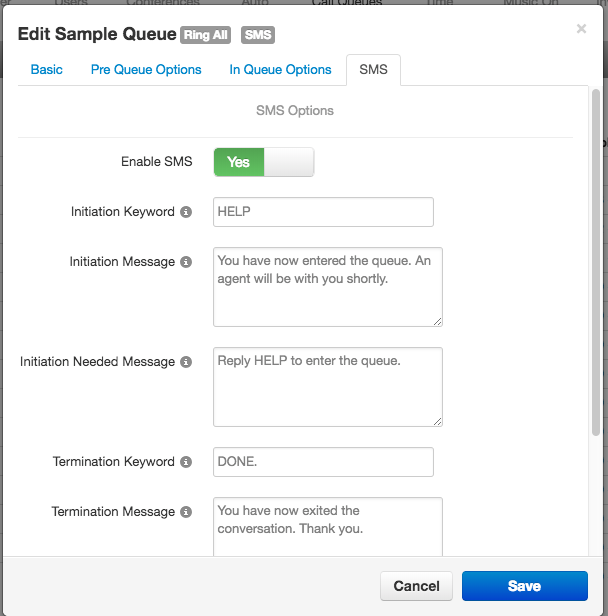
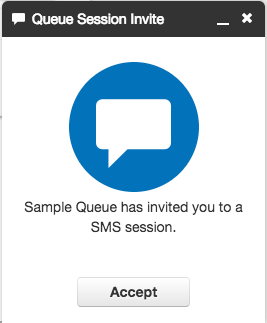
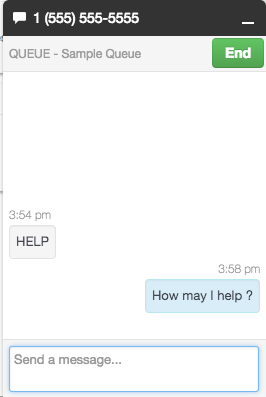
Our platform now supports SMS queueing, allowing agents to send and receive text messages from a call queue. Early feedback shows that this feature has become a practical tool in scheduling and helpdesk-style environments. Users now have the ability to set keywords for initiation and termination of message sessions, as well as initiation and termination messages that will automatically generate based on said keywords. You can also set maximums for open SMS sessions on a per agent basis and pull SMS statistics for call queue reporting. Incoming SMS messages will appear in a chat window for all available agents. Once an agent joins a conversation, they will take over that chat for the duration of the conversation, and it will no longer appear in other agents’ messages.
For more information on call queues and numerous other features of the True IP Solutions Hosted VoIP Platform, contact our sales team.
Email: sales@trueipsolutions.com
Phone Number: 855-878-TIPS (8477)